Jordan Feeley
Gutter Repairs in Bridgend: Signs Your Gutters Need More Than a Clean
Gutter Cleaning

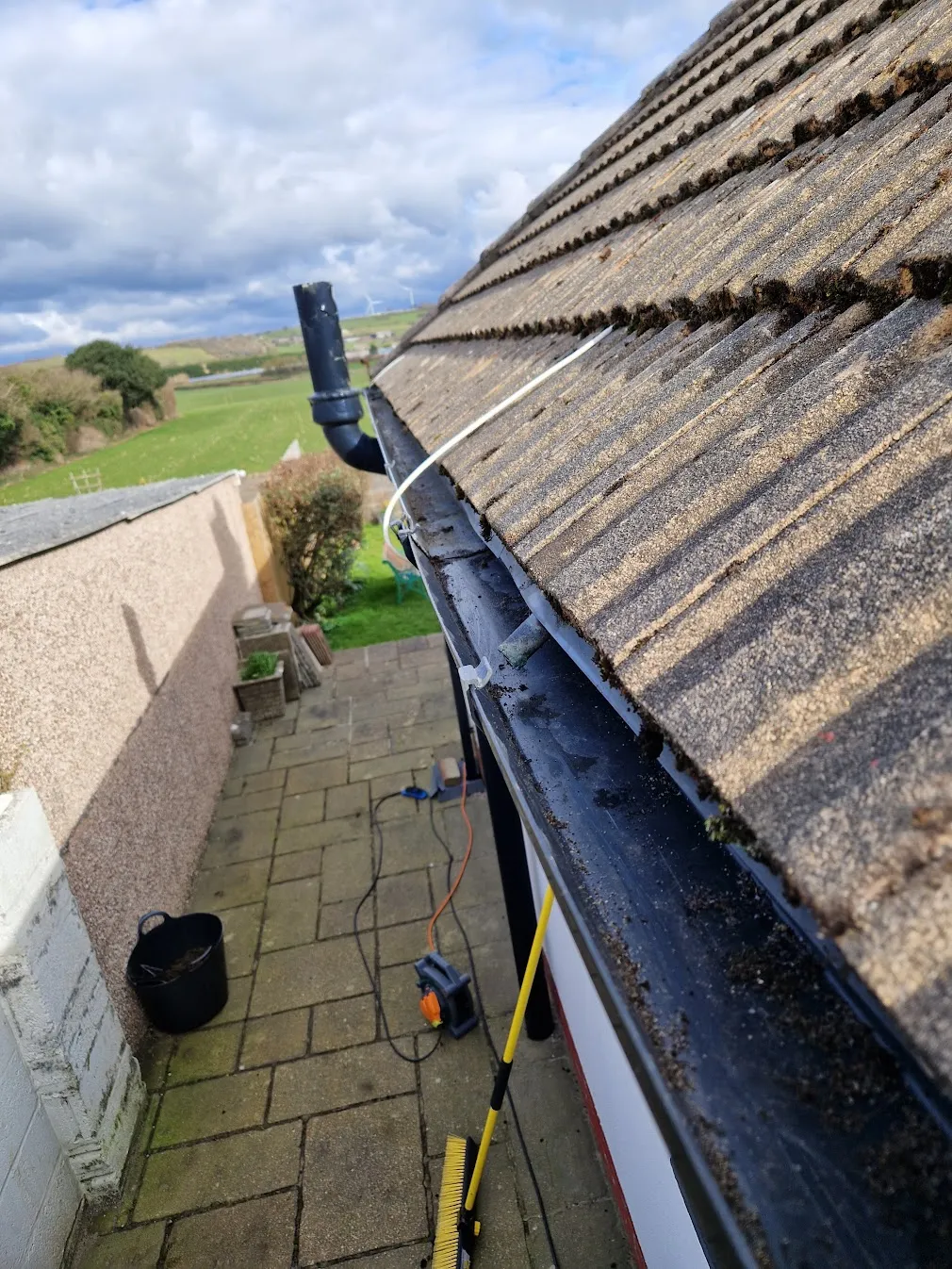
After more than a decade cleaning gutters across Bridgend, Porthcawl and the surrounding villages, I can tell you this with confidence: most of the gutter problems I see started out as cleaning jobs that were left too long. A regular clean is the cheapest insurance you can buy for your home. But sometimes a clean alone is not enough, and recognising the difference can save you thousands in property damage.
This post is about what to look for, when to book a repair alongside a cleaning visit, and why timing matters so much for properties in the South Wales climate.
A simple gutter clean removes debris, moss, silt and leaf matter so water can flow freely again. A repair addresses physical damage to the gutter itself, or to the fascia board behind it.
If your gutters overflow only when full of leaves, a clean will fix that. If they overflow immediately after a clean, you are looking at a repair job. Sagging, pulled-away sections, split joints, rotten fascia boards and loose downpipes all need fixing, not just clearing.
Our full service covers both sides of this. You can read about our regular gutter cleaning in Bridgend for routine work, and we handle small repairs in the same visit where it makes sense.
A gutter that dips in the middle has either filled up with water, which is a sign of a blockage, or come loose from its brackets. The weight of repeated rainfall in Welsh winters is significant. Once brackets start giving way, the gutter tips back towards the wall and water runs behind it, soaking into your brickwork rather than draining away.
Look up at your gutters after rain. If any section is holding standing water, it is not level any more and needs re-hanging.
Dark streaks running down the front or side of your house are usually the first visible sign of a gutter problem. Water that should be moving through your downpipe is spilling over the edge, picking up dirt, moss and roof residue, and leaving a tide mark on your render or brickwork.
If you are already planning render cleaning or pressure washing, fix the overflow first. Otherwise the stains come back within a season.
The fascia is the board behind your gutter. When gutters overflow repeatedly, water sits against the fascia and soaks in. In Bridgend and Porthcawl, where the weather rarely gives it a proper chance to dry out, rotten fascia is one of the most common issues we spot.
Signs include soft or spongy timber, flaking paint, and visible water staining just under the gutter line. Left alone, fascia rot spreads into the roof structure and becomes a much larger job.
Plastic guttering expands and contracts with temperature changes. Over time the rubber seals in joint connectors harden and crack. You will notice a steady drip in one spot every time it rains, even when the gutters are clear of debris.
These are straightforward to fix if caught early. New seals or a replaced connector take a few minutes. Leave it for a year and you are looking at replacing a whole run.
If your downpipe is coming loose at the top or at one of the wall fixings, water ends up running behind it instead of through it. That water finds the shortest route, usually straight into your wall cavity.
Downpipe brackets are cheap and quick to refit. They fail silently, so it is worth checking them each time you clean the gutters.
We get more rainfall than most of the UK. Combined with coastal salt air in Porthcawl, moss growth on our roof tiles, and the number of mature trees around Bridgend, local properties take a beating every winter.
Catching gutter issues in autumn, before the first storms, is always the cheapest option. Waiting until January or February, when the damage is already showing up inside the house, means paying for both the repair and the interior redecoration.
If you have not read it already, our guide on 7 signs you need a gutter cleaner in Bridgend covers the basic warning signs. This post takes it one step further for when cleaning alone will not do the job.
On a standard visit, we clear all debris, flush the gutters, check every joint, refit loose brackets, replace worn seals, and flag any fascia rot or major damage before we start. You get a clear report and a quote for anything larger that needs booking in.
Most of the Bridgend homes we work on need a proper clean every six to twelve months and a light repair every few years. That is far cheaper than waiting for water damage to show up inside the house.
If you have noticed any of the signs above, get in touch. You can book a free site visit and we will tell you honestly whether it is a cleaning job, a repair, or both.